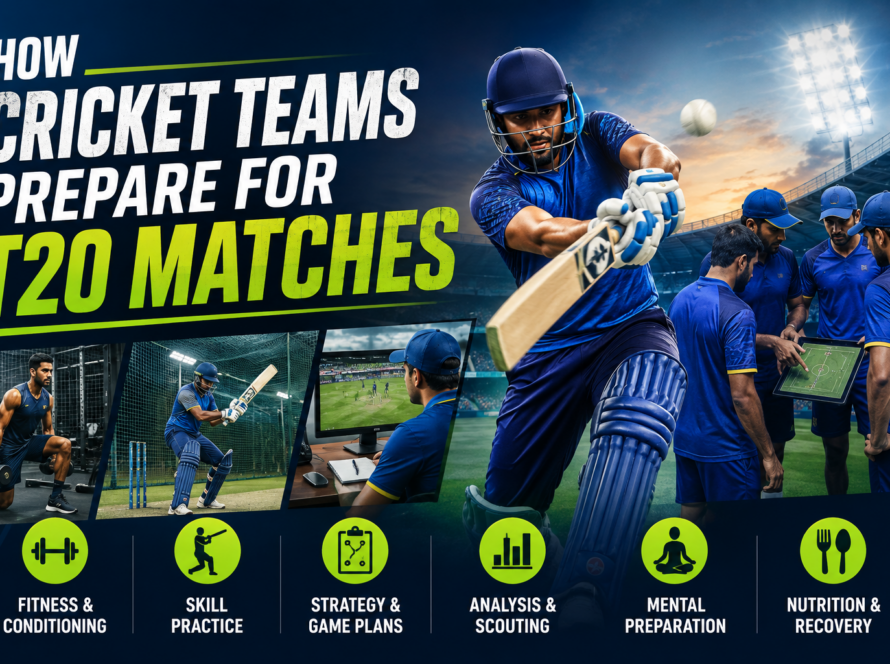
Professional cricket demands much more than natural talent. Players need strength, endurance, technical skills, concentration, and the ability to perform consistently under pressure. As the game becomes faster and more competitive, cricket training has also become increasingly structured and specialised.
From fitness sessions to skill-based drills, professional players follow carefully planned routines designed around their role and upcoming matches.
What Does Professional Cricket Training Include?
Professional cricket training usually combines several areas rather than focusing only on batting or bowling. Coaches create programmes according to a player’s position, workload, fitness level, and competition schedule.
A typical programme may include:
- Batting or bowling practice
- Fielding and catching drills
- Strength and conditioning
- Sprint and agility exercises
- Mobility and recovery work
- Tactical and match-situation practice
The balance can change depending on whether a player is preparing for a Test match, ODI, or T20 competition.
Why Is Player Fitness Important?
Modern cricket requires players to move quickly and repeatedly throughout a match. Fast bowlers need strength and endurance, while batters and fielders require agility, balance, and explosive movement.
Player fitness therefore forms an important part of preparation. Strength exercises can support physical performance, while running and agility drills help players develop speed and coordination.
Recovery is equally important. Professional schedules can involve frequent matches and travel, making rest, hydration, nutrition, and appropriate recovery sessions essential parts of maintaining performance.
How Do Players Practise Their Cricket Skills?
Regular cricket practice allows players to repeat important skills in controlled conditions. Batters may work on specific shots, footwork, or responses to different types of bowling. Bowlers can practise line, length, variations, and delivery consistency.
Fielders also spend considerable time working on catching, throwing accuracy, ground fielding, and quick movement.
Increasingly, video and performance data are used alongside traditional practice. Reviewing footage can help players identify technical patterns and understand where adjustments may be useful.
Training Around Match Demands
Professional teams often recreate realistic match situations during practice. A batter might practise chasing a target with limited overs remaining, while bowlers may work on defending runs during the final stages of an innings.
This approach connects physical preparation with tactical decision-making and helps players understand their responsibilities before entering an actual match.
Conclusion
Modern cricket training is a combination of skill development, fitness, tactical preparation, and recovery. Professional cricket training programmes are carefully adapted to individual players, while player fitness and regular cricket practice remain important throughout a season.
For readers following cricket-related developments and training stories, Parimatch live offers a useful publishing platform where writers can share analysis, news, and perspectives about the sport.